
How Much Does Window Film Save on Houston Energy Bills?
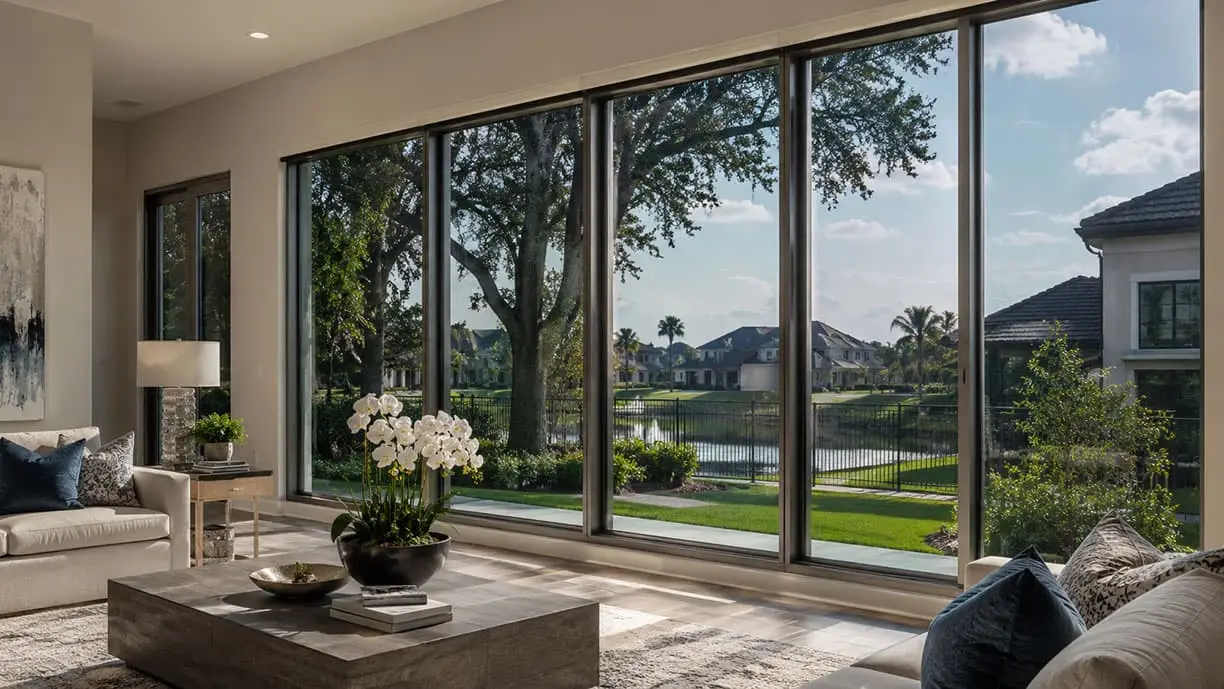
Window film can trim the cooling portion of a Houston energy bill, but the amount lands in a range rather than a fixed number because it depends on the film, the windows, and the sun each pane gets. It lowers cooling cost by rejecting solar heat at the glass, so the air conditioner cycles less across Houston's long cooling season.
This page from Greenhouse Solar Control breaks down the mechanism, the variables, how to estimate it, and payback so you can judge window film energy savings for your own home in Houston, TX.
Savings vary widely by home, so treat every figure here as a framework for your own numbers, not a guarantee.
How Window Film Cuts a Houston Cooling Load
Window film cuts cooling load by rejecting solar heat before it enters the room. Sunlight hits the glass as visible light and infrared energy, and clear glass lets much of that energy pass straight through into your home. That transmitted energy becomes heat inside the room, and the air conditioner then works to remove it.
What changes at the pane
Window film changes the exchange at the pane. The film reflects and absorbs a share of the incoming solar and infrared energy, so less of it reaches the interior.
Less heat entering the room means the air conditioner runs shorter and less often to hold the thermostat setting. Over a Houston cooling season that can stretch from spring into fall, those shorter cycles are where the energy savings come from.
The ratings that describe heat rejection
The heat-blocking power of a film is described by industry ratings, not marketing adjectives. Total Solar Energy Rejected measures the share of solar energy the film keeps out, and the Solar Heat Gain Coefficient describes how much solar heat passes through the combined glass-and-film system. A film with stronger heat rejection lowers cooling load more because it stops more of the solar energy at the window.
What the published numbers show
Those ratings are published per product, which puts a hard ceiling on the whole calculation. SunTek's published architectural specifications list total solar energy rejection up to 82 percent, and LLumar's published architectural film performance data reaches up to 93 percent, but both figures belong to dark or mirrored films built for warehouse walls rather than bedrooms.
A clear film rejects less, and no film rejects all of it. These are the manufacturers' numbers, measured on their own products. This is the same heat reduction that keeps a sun-facing room comfortable, and it is the engine behind any bill savings.
The Variables That Change Your Savings
No two homes save the same amount because the inputs differ. These are the variables that move window film energy savings up or down:
- Film type and SHGC. A film with a lower Solar Heat Gain Coefficient rejects more solar heat, so a high-performance ceramic film cuts more load than a light dyed film. The film you choose sets the ceiling on how much heat stays out.
- Window area. More square footage of glass means more surface for heat to enter, so a home with large or numerous windows has more potential savings than one with little glass.
- Orientation. West- and south-facing windows take the hardest sun, especially through Houston afternoons, so filming those panes returns more than filming a shaded north side.
- How much sun the glass gets. Unshaded windows in full sun gain more heat than panes behind trees, awnings, or a porch, so exposure changes the payoff pane by pane.
- Existing insulation and glazing. A leaky, single-pane home has more room to improve than a tight home with modern double-pane low-E glass that already blocks some heat.
- Thermostat habits. A lower thermostat setting and longer cooling hours mean the air conditioner runs more, so the same film saves more in a home that cools hard than in one kept warm.
Because these variables stack, two houses on the same street can see different results from the same film. That is why an on-site look at your glass beats any generic percentage.
How to Estimate the Savings for Your Own Home
Here is how to work out an honest estimate for your own home, using ranges instead of a single promised number. Start with your own utility bills rather than a figure from a brochure.
- Find your cooling cost. Compare a summer electric bill to a mild spring or fall bill. The difference is roughly what cooling adds each month, and it is the pool of spending that window film can shrink.
- Estimate the solar share. Only part of that cooling cost comes from solar heat gain through glass; the rest comes from walls, roof, ducts, and air leaks. Homes with many sun-facing windows carry a larger glass share, while homes with little glass carry a smaller one.
- Apply the film's rejection. Window film removes a portion of the solar heat entering through the glass, not the entire cooling bill. A stronger film with a lower SHGC takes out more of that glass-driven heat than a light film does. Use the published figure for the film you are actually quoting, not the top of anyone's range.
The result is a range, and the honest version is wide because the inputs above vary so much from home to home. A home with large, unshaded west windows and an older air conditioner sits at the higher end of the savings range, while a small, shaded, well-insulated home sits at the lower end. Your window tinting cost and your projected savings both come out of that same measurement.
How to Think About Payback
Payback is the upfront film cost divided by the yearly energy savings, and both halves depend on your home. A larger area of high-sun glass raises the yearly savings, which shortens payback, while a small shaded project saves less each year and takes longer to return its cost.
The returns beyond the bill
Energy savings is not the only return window film delivers. The same heat rejection improves comfort by evening out hot rooms, and the film adds UV protection that slows the fading of floors, furniture, and artwork. Counting comfort and fade protection alongside the bill savings gives a fuller picture of what the film is worth over its life.
Houston Window Film Energy Savings: Frequently Asked Questions
Get a Free Estimate on Window Film Savings in Houston and Katy
Greenhouse Solar Control helps Houston homeowners put real numbers on window film energy savings for their own glass. When a hot, sun-baked room is driving your bill, start with heat reduction window tinting and let our team measure the windows that cost you the most.
We provide professional installation of residential window tinting and commercial window tinting across Houston, TX and Katy, TX. Call (281) 961-3058 for a free estimate, and we will turn your windows, orientation, and film choice into a savings and payback estimate for your home.