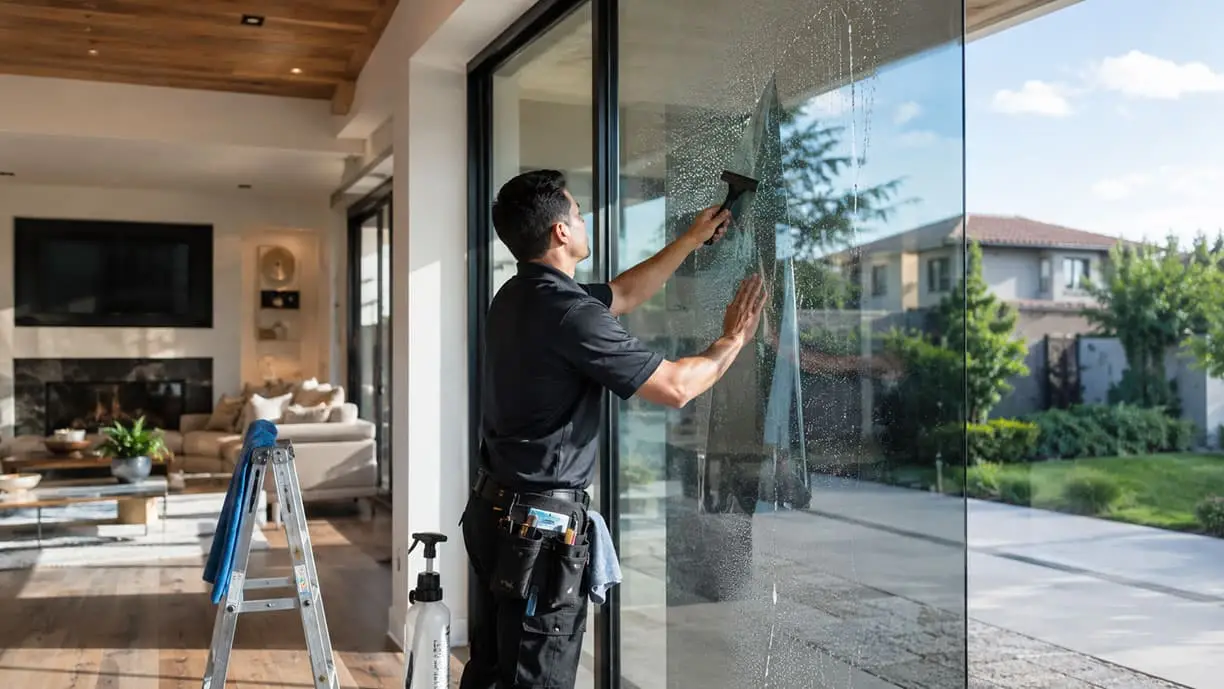
Ceramic Window Tint Installation for Houston Homes

Residential · Ceramic window tint
Ceramic window tint install for Houston homes

Ceramic window tint blocks 40–82% of infrared solar heat entering Houston homes without reducing visible light or changing the appearance of your windows. Unlike dyed or metalized films that degrade or interfere with electronics, ceramic window tint uses nano-ceramic particle technology that rejects heat at the molecular level — delivering the highest performance available in residential window film. Greenhouse Solar Control has installed ceramic on thousands of Houston-area homes over 15+ years, using premium films from 3M, XPEL, and LLumar rated to block 99.9% of UV rays and reduce interior temperatures by 10–15°F.

What Is Ceramic Window Tint?

The highest-performance tier in residential window tinting — engineered for maximum heat rejection without signal interference, color fading, or a reflective look.

01 · Definition

Ceramic window tint is a specialized form of residential window tinting that uses non-metallic nano-ceramic particles to block solar heat and ultraviolet radiation while maintaining high visible light transmission and clarity. Also known as ceramic window film or nano-ceramic film, ceramic window tint represents the highest-performance tier in the window tinting category — engineered specifically for maximum heat rejection without the signal interference, color fading, or reflective appearance associated with dyed and metalized alternatives.

02 · For your home

Up to 82% IR heat rejection & 99.9% UV blocking — near-invisible on glass.

No cell / Wi-Fi / GPS interference. No purple fading like dyed film. Backed by a lifetime residential warranty.

03 · The choice

Ceramic window tint is the product Houston homeowners choose when they need the most effective heat control available without changing how their windows look from inside or outside the home.

Why Houston Homes Need Ceramic Window Tint

204 sunny days. 97°F+ summers. UV index 10–11. $169/mo average electricity bill — climbing to $280 in July and August.

A relentless solar load

Houston averages 204 sunny days per year with summer temperatures regularly exceeding 97°F and humidity above 75%. CenterPoint Energy reports average residential electricity bills reach $169/month — climbing to $280+ during July and August when air conditioning runs nearly continuously.

Glass that lets heat in

Standard single-pane and even dual-pane windows allow 70–85% of solar infrared radiation to pass through. South- and west-facing windows are the worst offenders — interior surface temperatures near unprotected glass can exceed 130°F during peak afternoon hours.

Heat solved at the source

By rejecting up to 82% of infrared heat before it enters the home, ceramic reduces interior temperatures by 10–15°F and typically cuts cooling costs by $40–$70/month during Houston's 5-month peak cooling season. Homeowners report average annual savings of $300–$550 — a 2–4 year payback.

If you need broader coverage for your entire home, explore our full residential window tinting services in Houston or our dedicated heat reduction window tinting options.

How Ceramic Window Tint Works

Multiple layers of polyester film embedded with nano-ceramic particles selectively filter the light spectrum. Ceramic uses microscopic, non-metallic, non-conductive particles — typically titanium nitride or aluminum oxide compounds — the key difference from older metalized technologies. Toggle the film on and off to see how each band of solar energy is treated.

Interactive · See how the film works

Daylight in, infrared heat & UV out

Visible daylight60% passes through

Transmitted cleanly — no darkening and no mirror effect, even at higher VLT ceramic.

Infrared heatup to 82% rejected

Nano-ceramic particles absorb and reflect the infrared energy you feel through glass.

Ultraviolet99.9% blocked

The rays that fade furniture, hardwood, and artwork — virtually eliminated.

Nano-ceramic film keeps daylight while rejecting up to 82% of infrared heat and 99.9% of UV — a 10–15°F interior temperature drop with no darkening, no mirror effect, and zero signal interference.

Because ceramic contains no metal, it does not interfere with cell phone signals, GPS navigation, Wi-Fi, or garage door openers — a common problem with metalized tint that Houston homeowners discover only after installation. For dedicated UV solutions, see our UV protection window film.

Ready for the highest-performing residential window film? We bring film samples to every consultation.

Ceramic Window Tint — Quick Facts

Direct answers Houston homeowners ask before scheduling a ceramic tint install.

How Much Heat Does Ceramic Window Tint Block?

Ceramic window tint blocks 40–82% of infrared solar heat depending on the VLT rating selected. A premium ceramic at 70% VLT — nearly invisible — rejects approximately 50% of solar heat. Lower VLT ceramic films (25–35%) achieve 75–82% heat rejection. In Houston homes, ceramic typically reduces interior temperatures by 10–15°F on south- and west-facing windows.

How Much Does Ceramic Window Tint Cost in Houston?

Ceramic window tint in Houston costs $8–$18 per square foot installed. For a typical Houston home with 12–18 windows, total ceramic installation ranges from $2,000–$4,500. Premium ceramic films (3M Prestige, XPEL VISION) run $12–$18/sq ft, while standard ceramic starts at $8–$10/sq ft. The investment typically pays for itself in 2–4 years through reduced cooling costs.

How Long Does Ceramic Window Tint Last?

Ceramic window tint lasts 25+ years with proper care. Premium ceramic from 3M, XPEL, and LLumar carries a lifetime residential warranty. Unlike dyed tint that fades and turns purple within 3–7 years, the inorganic nano-ceramic particles do not degrade under UV exposure — heat rejection performance remains consistent for the life of the product.

Ceramic Window Tint Performance by Film Type

Not all ceramic products perform equally. Tap a film to compare it on heat rejection, UV, cost, and lifespan against premium ceramic — these are the films we install most frequently in Houston homes.

Tap a ceramic film to compare its performance

Film TypeInfrared Heat RejectionUV RejectionPrice / Sq FtInstallWarranty
Premium Ceramic (3M Prestige)78–82%99.9%$12–$18/sq ftSame dayLifetime
Mid-Range Ceramic (LLumar CTX)60–72%99.9%$9–$14/sq ftSame dayLifetime
Standard Ceramic40–58%99%+$6–$10/sq ftSame day10–15 yrs

Our recommendation for most Houston homes: Premium ceramic at 50–70% VLT on south- and west-facing windows provides the best balance of heat rejection, natural light, and curb appeal. For glare/privacy combined, a 35–40% VLT mid-range ceramic delivers excellent performance at a lower cost.

Want to see how ceramic compares to metalized, dyed, and carbon films? Visit our complete guide to compare all window film types.

Ceramic Window Tint vs. Regular Window Tint

"Regular" window tint — typically dyed or dyed-hybrid film — costs 30–50% less than ceramic. For Houston homeowners deciding between the two, the differences go beyond price.

01 · Heat rejection

Ceramic blocks 40–82% of solar heat vs. 25–40% for standard dyed film. In a 15-window Houston home, that translates to a 6–10°F interior temperature reduction and $25–$45/month additional energy savings during summer.

02 · Durability

Dyed film fades and turns purple within 3–7 years as UV exposure breaks down the dye layer. Ceramic uses inorganic particles that do not degrade under UV — heat rejection remains consistent for the life of the installation. In Houston's UV environment (8–11 May–Sep), this durability gap is magnified.

03 · Signal interference

Metalized tint — the other "regular" option — contains aluminum or nickel particles that reflect heat but also block cell signals, disrupt Wi-Fi near windows, and interfere with garage door openers. Ceramic contains zero metal. Signal interference is zero.

04 · Appearance

Dyed film creates a flat, dark appearance that some HOAs restrict. Metalized film creates a reflective, mirror-like finish. Ceramic appears nearly invisible — especially at higher VLT ratings — making it the only option that works for every Houston neighborhood, including HOA-governed communities.

Bottom line: Ceramic costs more upfront but outperforms standard tint in every measurable category. For Houston's climate, ceramic delivers the longest-lasting, highest-performing result.

Case Study — Ceramic Window Tint on a Sugar Land Home

Real measurements. Real savings. Documented before and after.

01 · The home

2,400 sq ft single-story ranch in Sugar Land, TX. West-facing living room reaching 84°F by 2:00 PM despite AC running continuously; summer 2025 CenterPoint bills averaged $310. 18 single-pane windows, 12 facing south and west.

The solution: We installed 3M Prestige 70 ceramic window tint on all 12 south- and west-facing windows. Prestige 70 transmits 70% of visible light (nearly invisible) while rejecting 82% of infrared heat and 99.9% of UV radiation. Installation completed in one day — approximately 5.5 hours of on-site work.

02 · Measured
  • Interior temperature (west-facing room, 2:00 PM): 84°F pre-install → 76°F post-install (IR thermal gun, same weather)
  • Glass surface temperature: 138°F pre-install → 94°F post-install
03 · The payoff
  • Monthly energy bill (Jul–Sep avg): $310 → $248 — a $62/month reduction
  • Annual estimated savings: $370+
04 · The homeowner

"The living room is actually usable in the afternoon now. We didn't realize how much heat was coming through the glass."

Ceramic Window Tint Cost in Houston

$8–$18 per square foot installed. Roughly 15–20% of the cost of Low-E window replacement for equivalent heat rejection — depending on film brand, VLT rating, and number of windows. Pick your ceramic grade and window count below for a ballpark.

Tap a ceramic grade to estimate your project

Film TypeCost Per Sq FtTypical Home (12–18 windows)
Premium Ceramic (3M Prestige)$12–$18/sq ft$3,200–$5,500
Mid-Range Ceramic (LLumar CTX)$9–$14/sq ft$2,000–$3,800
Standard Ceramic$6–$10/sq ft$1,200–$2,400

Premium ceramic (3M Prestige, XPEL VISION) runs $12–$18/sq ft; standard ceramic starts at $8–$10/sq ft. Combined with $300–$550/year in energy savings, ceramic delivers a 2–4 year payback for most Houston homes. Compare: equivalent Low-E window replacement runs $800–$1,200 per window — a 15-window job at $12,000–$18,000 vs. $2,000–$4,500 for ceramic.

For full pricing across all film types, see our complete window tinting cost guide.

How We Install Ceramic Window Tint

6-step protocol developed over 15+ years and 12,000+ installations across the Houston metro area.

01
Per window

Window Assessment

Before recommending any ceramic product, we inspect every window for compatibility. Ceramic is safe for most window types, but dual-pane windows with existing Low-E coatings require specific film selections to avoid thermal stress. We check glass type, seal condition, frame material, and sun exposure angle.

1 / 6

For more details on our installation standards, visit our professional window film installation page.

When Ceramic Window Tint Is Not the Right Choice

Honest limitations from 15+ years of Houston installations.

Before You Buy

Ceramic is the highest-performing residential film for heat and UV rejection. But it is not the right solution for every situation.

  • Dual-pane windows with factory Low-E coatings: Adding ceramic to Low-E glass can cause thermal stress — the film absorbs heat that gets trapped between the panes, potentially cracking the glass or breaking the seal. We test for Low-E during our free assessment.
  • Primary goal is break-in protection or storm resistance: Ceramic reduces heat and UV but does not provide meaningful impact resistance. If your primary concern is security or hurricane protection, see our security window film or hurricane protection window film.
  • Windows scheduled for replacement within 2 years: Ceramic is adhered to the glass and does not transfer to new windows. If you are planning replacement, we recommend specifying Low-E or heat-reflective glass in your new windows instead.
  • Budget under $1,200 for the full home: Standard dyed or carbon hybrid film provides moderate heat rejection at 30–50% lower cost. We always present options during the estimate — not everyone needs ceramic on every window.

We perform a free window assessment before recommending any film to ensure compatibility and avoid unnecessary expense.

Ceramic Window Tint Installation Across the Houston Metro

50-mile radius from our Houston and Katy locations. Free on-site assessment includes film samples.

Houston, TX

Ceramic window tint installation in Houston, TX

Katy, TX

Ceramic window tint installation in Katy, TX

Cypress, TX

Ceramic window tint installation in Cypress, TX

Pearland, TX

Ceramic window tint installation in Pearland, TX

Spring, TX

Ceramic window tint installation in Spring, TX

Ceramic Window Tint: Frequently Asked Questions

Visibility, value, resale, install time, presence — what Houston homeowners ask before scheduling ceramic. Still unsure? Call (281) 961-3058.

Ceramic window tint at 50–70% VLT has minimal impact on nighttime visibility from inside. You can see out clearly. However, ceramic window tint does not provide significant privacy at night when interior lights are on — if nighttime privacy is a priority, a lower VLT (25–35%) or a dedicated privacy film is recommended.
For Houston homes, ceramic window tint is worth the 30–50% price premium over standard dyed film. The additional heat rejection (40–82% vs. 25–40%) saves $300–$550/year in energy costs, ceramic lasts 3–5x longer, and it does not interfere with cell signals or Wi-Fi. The payback period for the upgrade is typically 1–2 years.
Ceramic window tint is a net positive for home resale in the Houston market. Energy efficiency upgrades are valued by buyers, and ceramic's invisible appearance avoids the aesthetic concerns that darker tints can create during showings. The lifetime warranty transfers to the new homeowner.
Ceramic window tint installation takes 4–8 hours for a typical Houston home with 12–18 windows. We complete most ceramic projects in a single day. After installation, ceramic window tint requires a 15–30 day curing period during which slight haziness is normal.
You do not need to be home for the entire installation. We require access to the interior of the home (ceramic window tint is applied to the inside surface of each window) and ask that one walkthrough be scheduled at the start and end of the project.
Free estimate

Get a Free Ceramic Window Tint Estimate

Call (281) 961-3058 to speak with our team or click below to schedule online. We respond to all inquiries within 24 hours and offer flexible scheduling including Saturdays. Greenhouse Solar Control — 15+ years serving Houston, licensed & insured in Texas, with a lifetime warranty on residential window film.

(281) 961-3058