Cut vinyl lettering
Cut vinyl suits business names, hours, door information, simple logos, and other designs that use clean shapes or text without a printed background.
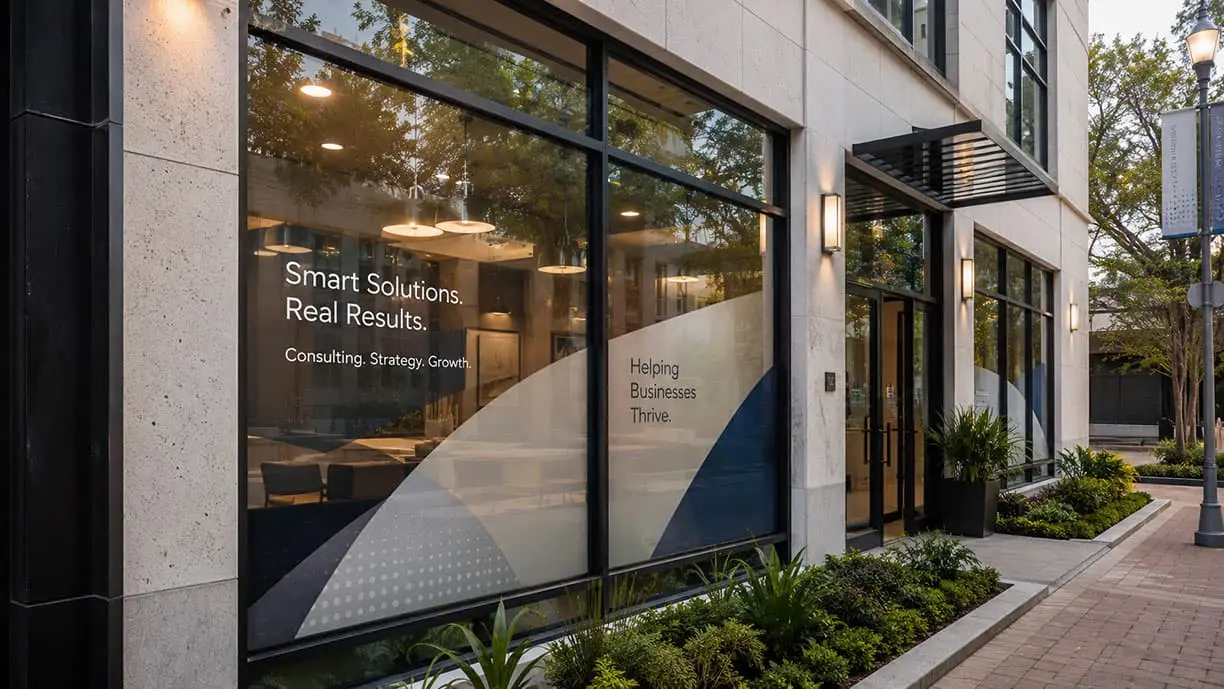
Commercial window graphics turn doors, storefronts, partitions, and other glass surfaces into branded or privacy-focused displays. Greenhouse Solar Control supplies and installs custom graphics based on the artwork, measurements, coverage, visibility, and finish the customer requests.
Commercial window graphics are adhesive films cut or printed for glass. They can display a logo, identify a business, promote an offer, add decorative detail, or obscure the view through part of a window.
The film applies directly to suitable glass without replacing the pane. A design can cover a small door panel, repeat across an office partition, or span a larger storefront. The project begins with the intended message and the amount of visibility the glass must keep.
Greenhouse Solar Control coordinates the window-specific layout, production requirements, and installation. Customers can provide existing brand files, reference artwork, colors, wording, or a clear design brief for quotation.
The correct material depends on the design, viewing distance, required privacy, light transmission, installation surface, and how long the display must remain in place.
Cut vinyl suits business names, hours, door information, simple logos, and other designs that use clean shapes or text without a printed background.
Printed film supports photographs, gradients, campaign artwork, detailed illustrations, and full-color branding across a selected area of glass.
Frosted film can add a logo or pattern while diffusing the view through office partitions, meeting rooms, doors, and street-facing glass.
Perforated film can display artwork toward the brighter side while preserving some outward visibility from the darker side. The effect changes when the light balance reverses.
Privacy bands and gradients screen the most visible portion of a glass wall while allowing light to pass above, below, or between the printed areas.
Promotional graphics can support a launch, event, seasonal message, temporary closure, or leasing campaign when the material and removal plan match the schedule.
Every graphic changes the glass differently. Opaque film blocks the view, frosted film diffuses detail, and perforated film depends on the lighting difference between the two sides.
Full printed and opaque films cover the selected area, so occupants cannot see clearly through that portion of glass. Frosted film allows diffuse light to pass while obscuring shapes and detail.
Perforated film creates a one-way visual effect when one side is much brighter than the other. Daylight often makes exterior artwork easier to see while occupants retain some view out. Interior lighting can reverse that balance at night, so perforated film should not be described as complete nighttime privacy.
Customers who require consistent screening should consider frosted, opaque, or layered solutions. The design review identifies the sightlines before production begins.
A graphics project moves from a requirements discussion to artwork review, a written quote, and installation. Each stage confirms a different part of the scope. Approval of the layout and material comes before production, so the finished design matches the intended message and coverage.
The customer explains the message, coverage, privacy goal, preferred finish, and schedule. The site visit confirms the glass dimensions, surface condition, viewing distance, and access.
The team reviews the available brand files and selects a material that suits the design and glass. The proposal identifies what the customer must approve before production.
The written quote reflects the measured area, material, print or cutting requirements, surface preparation, access, and installation scope. Production begins after the customer approves the final details.
The team prepares the film and installs it on the approved glass. The installer checks alignment, seams, edges, and the final presentation before completing the job.
The final price comes from the measured area, selected material, design complexity, production method, surface preparation, access, and installation schedule. A free on-site visit confirms the scope.
Each graphics project is different, so Greenhouse Solar Control does not apply a minimum job charge or publish one fixed price for every window. Customers pay for the approved materials and services required for their project.
A simple door-lettering project uses fewer production steps than a full-color storefront wrap. Frosted logo work, perforated graphics, multiple panels, difficult access, and detailed alignment can also change the quote. The written estimate gives the final price after the team measures the glass and reviews the complete requirements.
A useful brief identifies the message, covered glass, viewing direction, and expected display period. The installer also needs artwork requirements and privacy goals. These details determine the material and production scope before you approve the design and final installation price.
For the wider service context, see commercial window film.
Provide a logo or artwork file when available and explain whether the design is temporary. Confirm landlord or sign approvals before production.
For this decision, compare artwork, viewing direction, coverage, removal. Bring the relevant details to the assessment so the recommendation addresses your actual property.
Continue with our guide to storefront window film. It addresses a related part of the decision so you can check the scope before approving work.
Customers describe their experience with our communication, scheduling, and installation. These individual comments also appear on our reviews page.
“Greenhouse was great, I love my new system. Yousef was very informative and made the entire process easy. Highly recommend!”
“Nice guys, good job placing tint on our office windows & doors. Would recommend for anyone looking for tint!”
“They showed up exactly when they said they would and the work is phenomenal. They were able to match existing tint.”
“Communicative and efficient. A friend recommended them and I finally decided to reach out for tinting my patio window. I wish I would have done it sooner.”
These answers explain the choices that affect design, visibility, price, and installation.
Share the glass location, intended message, privacy goal, artwork status, and schedule. Greenhouse Solar Control will arrange a free on-site visit and provide a written quote for the confirmed scope.