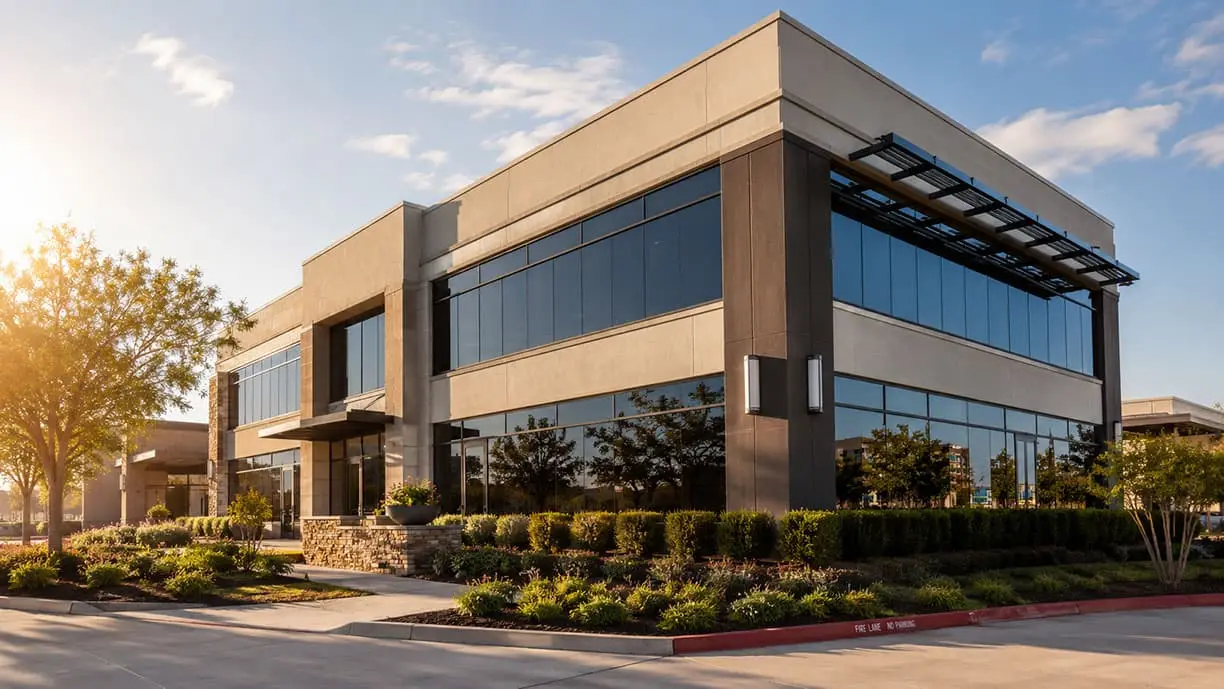
Commercial heat reduction window tinting in Houston, TX

Commercial · Heat reduction

Commercial heat reduction window tinting blocks 40–82% of solar infrared heat entering Houston offices, storefronts, warehouses, and commercial buildings through standard glass. Greenhouse Solar Control installs ceramic, dual-reflective, and solar control window films engineered to lower interior temperatures by 10–18°F and reduce commercial cooling costs by 25–35% based on CenterPoint Energy commercial rate structures. For most Houston commercial buildings, heat reduction window tinting is the fastest and most cost-effective way to reduce energy costs without replacing windows. With 15+ years serving businesses across the Houston metro area, we provide free on-site assessments and same-week scheduling.

What is commercial heat reduction window tinting?

A specialized application of commercial window film focused on energy performance and solar heat control for business environments.

01 · Definition

Commercial heat reduction window tinting is the application of specialized window film to commercial glass to block solar infrared heat, reduce cooling loads, and improve energy efficiency in offices, retail spaces, warehouses, and other business properties. It is a specialized application of commercial window tinting focused on energy performance and solar heat control for commercial environments.

02 · The names

Solar control window film is another term for heat reduction window tinting used in commercial applications. Both refer to the same category of professionally installed films designed to reject solar energy before it enters a building, lowering interior temperatures and reducing demand on HVAC systems.

03 · For your building

A complete commercial heat reduction package.

Free on-site glass audit · energy savings projection · ceramic / dual-reflective / spectrally selective film options · after-hours installation · 15-year manufacturer warranty · phased multi-floor scheduling.

Why Houston commercial buildings need heat reduction film

204 sunny days · 96°F+ summers · commercial rates $0.09–$0.12/kWh · peak demand charges 30–50% higher.

204 sunny days & 96°F+ summers

Houston averages 204 sunny days per year with summer temperatures regularly exceeding 96°F and humidity above 75%. For commercial properties, this translates directly into excessive cooling loads and inflated energy bills. CenterPoint Energy reports commercial electricity rates average $0.09–$0.12 per kWh, with peak-season demand charges pushing total costs 30–50% higher for buildings with south- and west-facing glass exposure.

Standard glass lets heat pour in

Standard commercial glass transmits 75–85% of solar infrared heat into building interiors. In a 5,000 sq ft office with 800 sq ft of window area, that solar heat gain can force HVAC systems to run 3–5 additional hours per day during June through September — adding $400–$900 per month in cooling costs that heat reduction window film eliminates.

Compounded heat across facades

Unlike residential heat reduction window tinting where single-story homes have limited glass exposure, commercial buildings face compounded heat gain across multi-story facades, expansive storefronts, and curtain wall systems. Commercial-grade film is engineered for these larger surfaces with higher TSER ratings — typically 55–78% — delivering measurable ROI within 18–30 months for most Houston businesses.

Ready to cut your building's cooling costs?

How commercial heat reduction film works

Ceramic heat reduction film rejects most solar infrared while keeping interiors lit — toggle the film on and off to see the difference on visible light, solar heat, and UV.

Interactive · See how the film works

Maximum heat rejected, daylight kept

Visible daylight50% passes through

Natural light kept — ceramic film cuts heat without turning offices dark.

Solar heat72% rejected

Up to 72% TSER bounced before it loads HVAC and warms perimeter zones.

Ultraviolet99% blocked

The rays that fade merchandise, flooring, and furnishings — virtually eliminated.

Ceramic heat reduction film rejects up to 72% of total solar energy and 99% of UV while keeping interiors bright — lowering temperatures near glass by 10–18°F.

Commercial heat reduction window tinting blocks 40–82% of solar infrared heat depending on film type. Ceramic films reject 55–72% of total solar energy while maintaining natural light, and dual-reflective films reach up to 78% TSER — the highest heat blocking available for commercial glass. Most Houston businesses cut cooling costs 25–35% after installation, and at $8–$18 per square foot installed the film costs 15–25% of window replacement with no structural modification.

Commercial heat reduction film options we install

Three primary categories — the right choice depends on building orientation, glass type, and operational priorities.

TSER55–72%
Visible light30–70% VLT
Best forOffices, medical, spaces requiring natural light without heat. UV rejection 99%+.

Ceramic heat reduction film is the most requested option for Houston commercial properties because it rejects significant heat without the mirrored appearance of dual-reflective films. It delivers 55–72% TSER while keeping interiors bright.

TSER60–78%
Visible light15–45% VLT
Best forStorefronts, warehouses — where max heat rejection outweighs light needs. UV rejection 99%+.

Dual-reflective film reaches up to 78% TSER — the highest heat blocking available for commercial glass. Its reflective exterior bounces solar load, making it ideal for west-facing walls and high-heat industrial spaces.

TSER50–65%
Visible light50–70% VLT
Best forHigh-rises, curtain wall systems — preserves exterior appearance. UV rejection 99%+.

Solar control spectrally selective film passes the most visible light while still rejecting 50–65% of total solar energy — preserving the building's exterior appearance on high-rises and curtain wall systems.

Ceramic heat reduction film is the most requested option for Houston commercial properties because it rejects significant heat without the mirrored appearance of dual-reflective films. For offices where natural light and occupant comfort both matter, ceramic window tint delivers 55–72% TSER while keeping interiors bright.

We install products from 3M, XPEL, and LLumar — each with manufacturer-backed warranties. To compare all window film types including security, decorative, and privacy options, see our complete window film guide.

Commercial building types we install heat reduction film on

Six building types — each with specific glass and operational requirements.

Office buildings & corporate spaces

Houston offices with floor-to-ceiling glass face extreme solar heat gain from April through October. Heat reduction film cuts interior temperatures by 10–18°F near windows, eliminating hot spots that force employees to adjust thermostats. We recommend ceramic or spectrally selective films that maintain natural light. See office window tinting.

Retail storefronts & restaurants

Storefronts and dining areas with west- or south-facing glass experience direct sun that drives customers away and overworks cooling systems. Heat reduction film protects merchandise from UV fading, lowers front-of-house temperatures, and reduces glare on displays — without blocking visibility. See storefront window tinting.

Warehouses & industrial

Large window bays and skylights in Houston warehouses create greenhouse-like conditions that compromise worker safety and product integrity. Dual-reflective heat reduction film can drop interior air temperatures by 12–20°F in un-airconditioned spaces. For facilities also needing break-in protection, we combine with commercial security window film.

Medical offices & healthcare

Medical offices, clinics, and dental practices require precise temperature control for patient comfort and equipment calibration. Heat reduction film stabilizes interior temperatures near windows without blocking natural light. We install films meeting healthcare facility standards with antimicrobial-compatible surfaces.

Schools, churches & institutional

Houston schools, churches, and community buildings typically have large single-pane windows — the least thermally efficient glass type. Heat reduction film transforms these from energy liabilities into insulated surfaces, reducing cooling costs by 30–40% in buildings that often operate on limited maintenance budgets.

Hotels & hospitality

Guest rooms with direct sun exposure generate the most complaints and the highest cooling costs per floor. Heat reduction film on hotel windows eliminates guest discomfort while reducing per-room HVAC costs — an ROI that property managers measure in months, not years.

Estimate your heat reduction payback

A 6,200 sq ft Westchase office dropped $2,800/mo cooling to ~$1,950 — an $850/month saving with a 22-month payback. Drag to match your building.

Estimate your payback period.

Based on CenterPoint commercial rates and a 25–35% cooling reduction in film-treated zones. Drag to match your building — we confirm exact figures with on-site thermal readings.

1,400 sq ft
1505,000 sq ft
$2,800
$300$10,000
Est. install cost$18,200at ~$13/sq ft
Monthly savings$840~30% of cooling
Payback periodenergy only

For a typical Houston commercial building, heat reduction film pays for itself in 18–30 months. Over a 15-year film lifespan, total cooling cost reduction ranges from $15,000–$45,000 depending on building size — excluding reduced HVAC wear and improved occupant comfort. Estimates are directional; payback shown reflects energy savings alone.

Commercial heat reduction cost in Houston

$8–$18 per sq ft installed. 15–25% of the cost of Low-E window replacement.

Commercial heat reduction window tinting in Houston costs $8–$18 per square foot installed, depending on film type, window accessibility, and building height. Select a film category and set your glass area to estimate your project.

Tap a film category, then set your glass area →

Film categoryCost Per Sq FtTypical office (2,000 sq ft)
Standard dual-reflective$8–$11$3,200–$5,500
Ceramic heat reduction★ Most common$12–$16$4,800–$8,000
Spectrally selective (3M Prestige)$14–$18$5,600–$9,000

Cost factors include window accessibility (multi-story buildings requiring lift equipment add $2–$4/sq ft), glass type (tempered, Low-E, or dual-pane may require specialized films), total window area (projects above 1,500 sq ft typically qualify for volume pricing), and after-hours installation (modest premium for labor scheduled outside business hours).

ROI comparison: Commercial heat reduction costs $8–$18/sq ft installed. Replacing windows with Low-E glass costs $50–$120/sq ft. Exterior shading systems cost $25–$60/sq ft. Tinting preserves existing glass, installs in 1–3 days with no structural modification, and delivers comparable heat rejection at 15–25% of the cost of window replacement.

For a typical Houston commercial building, heat reduction film pays for itself in 18–30 months. Over a 15-year film lifespan, total cooling cost reduction ranges from $15,000–$45,000 depending on building size.

Our commercial installation process

Six steps designed to minimize business disruption while ensuring long-term film performance.

01
Free

On-site assessment (free)

We measure every window, document glass type (tempered, annealed, Low-E, dual-pane), assess sun orientation using compass readings, and photograph the workspace. This determines which film delivers optimal performance for your specific building — not every film works on every glass type.

1 / 6

Commercial installations typically complete in 1–3 days with zero disruption to daily business operations. For details on our full service approach, visit our professional window film installation page.

When heat reduction film may not be the right solution

Honest professional advice — we will tell you before any work begins.

Heat reduction window film is highly effective for most commercial applications, but there are situations where we recommend alternatives:

Dual-pane windows with existing Low-E coatings: Adding heat reduction film to Low-E glass can cause thermal stress between the panes, potentially leading to seal failure and fogging. We assess every window during our free on-site evaluation and will advise against film on incompatible glass before any work begins.

Buildings where primary concern is break-in protection: If your business faces vandalism, smash-and-grab, or severe weather threats, heat reduction film alone does not provide structural protection. You need commercial security window film — which can be combined with heat reduction in a multi-layer application.

Spaces requiring full privacy from exterior view: Heat reduction film reduces glare and light transmission but does not create one-way opacity in all lighting conditions. If daytime and nighttime privacy are both critical, commercial privacy window tinting or frosted film is the better solution.

Windows scheduled for replacement within 12 months: If a full window replacement is already planned, installing film on glass that will be removed wastes your investment. We will tell you this honestly — and we can install film on your new windows after replacement.

Serving the full Houston metro within 50 miles

Commercial heat reduction near you in Houston

50-mile radius from our Houston and Katy locations.

Houston Metro: Downtown, Midtown, Galleria, Energy Corridor, Memorial, Heights, Montrose, Westchase, Greenway Plaza, Med Center.

For all commercial window tinting services — heat reduction, security, privacy, decorative — contact us for a free on-site assessment.

Commercial heat reduction — FAQ

Cost, brightness, install time, glass compatibility, high-rise work, and film brands.

Commercial heat reduction window tinting in Houston costs $8–$18 per square foot installed. A typical 2,000 sq ft office project costs $3,200–$9,000 depending on film type (standard reflective vs. ceramic vs. spectrally selective) and window accessibility. Multi-story buildings requiring lift access cost more than ground-floor installations.
Not necessarily. Spectrally selective and ceramic heat reduction films reject solar heat while maintaining 50–70% visible light transmission. Your building stays bright and naturally lit while interior temperatures drop significantly. Dual-reflective films are darker (15–45% VLT) but deliver the highest heat rejection for warehouses.
Most commercial installations complete in 1–3 days. A standard office with 20–40 windows takes 1–2 days. Larger projects — multi-story buildings, storefronts, warehouses — may require 2–3 days. We schedule installations during off-hours or weekends to avoid disrupting business operations.
Heat reduction film is compatible with most commercial glass types, including tempered, annealed, and single-pane windows. However, some dual-pane windows with existing Low-E coatings are not compatible because the film can cause thermal stress and seal failure. We assess every window during our free on-site evaluation.
Yes. We install heat reduction film on commercial buildings of all heights across the Houston metro, including high-rises in Downtown, the Galleria area, the Energy Corridor, and Westchase. Multi-story installations require specialized equipment and safety protocols — our team has 15+ years of experience on commercial high-rise projects.
We install commercial heat reduction films from 3M (Sun Control and Prestige Series), XPEL VISION, and LLumar — each backed by manufacturer warranties. During your free assessment, we recommend the specific product best matched to your building's glass type, orientation, and performance goals.
Free commercial audit

Get a free commercial heat reduction estimate

Hours: Monday–Friday 8:00 AM – 6:00 PM · Saturday 9:00 AM – 2:00 PM. Free on-site glass audit with projected energy savings within 48 hours. Greenhouse Solar Control — 15+ years serving Houston · Licensed & insured in Texas · Lifetime warranty on residential window film.

(281) 961-3058