
Reflective films give the strongest heat control, because a mirrored surface turns back more solar energy.
Commercial Heat Reduction Window Tinting in Houston
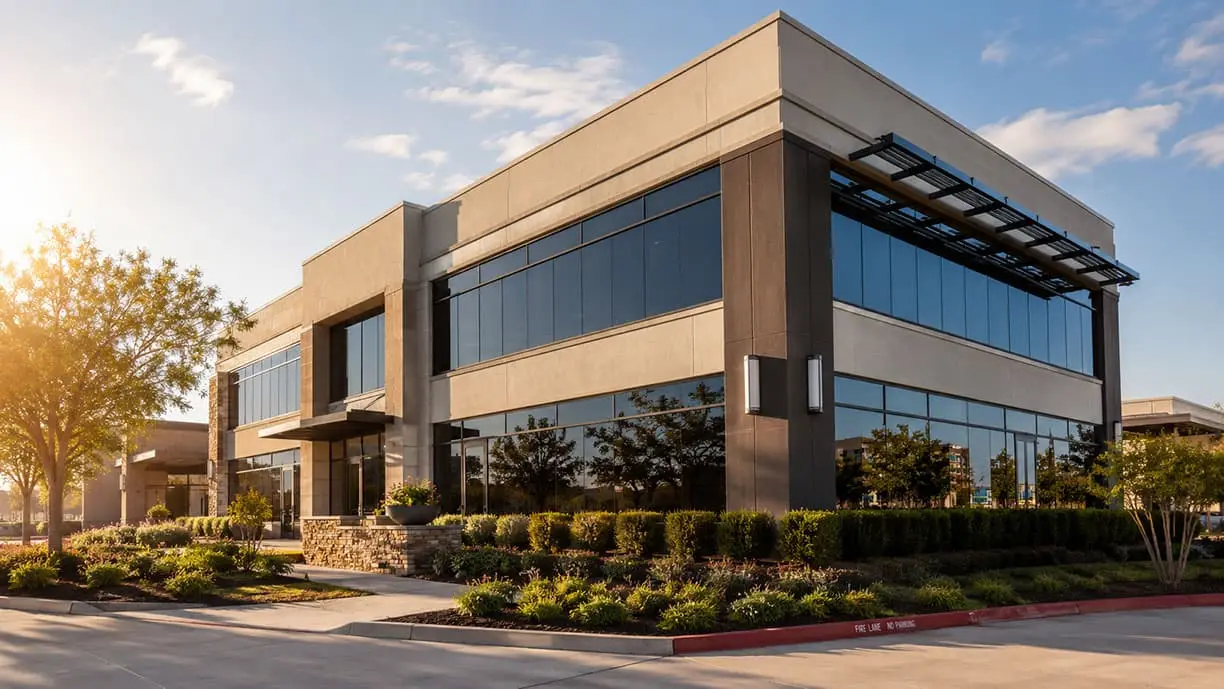
Commercial heat reduction window tinting is a retrofit film bonded to the inside of your building glass. It blocks a large share of the sun's heat before that heat reaches the occupied space. This page covers heat and sun control for Houston commercial buildings, from office towers to warehouses to retail storefronts.
Greenhouse Solar Control measures, cuts, and installs the film across Houston, TX and Katy, TX. The result is a cooler interior and less strain on your cooling equipment. Request a quote or call (281) 961-3058 to price your building.
Greenhouse Solar Control provides both residential window tinting and commercial window tinting. Heat control for homes is handled on a separate residential page. Here the focus stays on commercial glass and the heat load it carries.
How does commercial heat-reduction film work?
Commercial heat reduction film blocks solar heat gain at the window. Sunlight carries radiant heat, and clear glass lets most of that heat pass straight through. The film reflects and absorbs a portion of that solar energy at the glass surface. Less energy through the glass means less heat inside the room. Houston's cooling season runs long, so that heat load is a year-round cost rather than a summer-only one.
The film goes onto the glass you already have. Because it is applied to existing windows, you gain heat reduction without swapping out the glass. That keeps the upgrade simpler and less disruptive than replacing the panes. Once cured, the film stays clear enough to keep your outward view.
What benefits matter for an occupied building?
The benefits that matter most to building owners are lower cooling costs and steadier indoor temperature. Both follow from the same effect, which is less solar heat coming through the glass.
Lower cooling costs
Cooling costs drop because your air conditioning runs less. When the film cuts the heat load at the windows, the cooling equipment does not have to fight as hard to hold a setpoint. Equipment that cycles less draws less energy. Lower energy use then shows up on the utility bill.
The size of that change depends on your glass area, orientation, and current cooling load. We describe it as a meaningful reduction rather than a fixed number.
Steadier indoor temperature
Indoor temperature holds steadier because hot spots near the glass shrink. Sunny perimeter offices and south-facing conference rooms often overheat while interior rooms stay cool. Heat reduction film narrows that gap. Tenants near the windows then feel a more even temperature. A comfortable perimeter is also easier to lease, because prospective tenants notice glare and heat the moment they walk in.
UV protection for interior finishes
Heat reduction film adds UV protection as a second benefit. Ultraviolet light fades interior finishes such as carpet, upholstery, and stocked merchandise. The film screens out most of that UV, which slows the fading and protects what is inside.
Which film options suit facades and large panes?
Those benefits depend on matching the right film to the facade. Large glass facades need film chosen for the building, not a single generic product. Greenhouse Solar Control carries a range of commercial films for these fronts, including reflective films, neutral low-reflectance films, and spectrally selective films. Each type balances heat rejection, brightness, and exterior appearance differently.
Neutral films keep a low-key look, because they hold color close to the original glass.
Spectrally selective films keep interiors bright, because they reject heat while passing more visible light.
Dual-reflective films are a common pick for towers, because they cut heat from outside while holding a softer look from inside.
The right choice depends on your glass type, orientation, and the appearance you want for the facade. Visible light transmission describes how much daylight passes through, while total solar energy rejected describes heat performance. Reading both numbers prevents a dark-looking film from being mistaken for the only way to control heat.
For a single tenant space rather than a whole tower, see our office window tinting page for that scope. Some facades also call for privacy window film or security window film. Those films serve different goals than heat reduction, and each is covered on its own page.
How should a building prioritize solar-control film?
Prioritize occupied areas where sun-facing glass creates recurring heat or glare. Compare the window exposure with tenant schedules and existing glazing. The film specification should address those conditions while respecting facade appearance and access requirements, rather than promising one savings percentage for the building.
For the wider service context, see commercial window film.
01 · Before you decide
Gather complaints by room and time of day. Keep comfort observations separate from measured energy use so the project can define each objective accurately.
02 · Details to compare
For this decision, compare facade exposure, occupied hours, glass specification, appearance. Bring the relevant details to the assessment so the recommendation addresses your actual property.
03 · The next useful step
Continue with our guide to window-film energy savings. It addresses a related part of the decision so you can check the scope before approving work.
What do Houston-area customers say?
Customers describe their experience with our communication, scheduling, and installation. These individual comments also appear on our reviews page.
★ ★ ★ ★ ★
“Greenhouse was great, I love my new system. Yousef was very informative and made the entire process easy. Highly recommend!”
★ ★ ★ ★ ★
“Nice guys, good job placing tint on our office windows & doors. Would recommend for anyone looking for tint!”
★ ★ ★ ★ ★
“They showed up exactly when they said they would and the work is phenomenal. They were able to match existing tint.”
★ ★ ★ ★ ★
“Communicative and efficient. A friend recommended them and I finally decided to reach out for tinting my patio window. I wish I would have done it sooner.”
Frequently asked questions
Yes. The film reflects and absorbs part of the sun's radiant energy at the glass, so less of that heat reaches the interior. That is the core job of the product.
It can. Cooling equipment runs less when the film reduces the heat coming through the windows, and equipment that runs less uses less energy. The exact change depends on your glass area, orientation, and current cooling load.
Pricing depends on your total glass area, the film you choose, and access to the windows. See our window tinting cost page for the factors that shape a quote. Then request a quote so we can price your specific building.
Yes. Professional installation happens from the interior in most cases, so crews work inside the tenant space and leave the exterior facade untouched. That keeps disruption low during business hours.
Often, yes. The existing glass affects which film fits, because factory tints and coatings change how much added heat rejection is safe for the pane. A site assessment confirms the right film for your specific glass.
Request a commercial window tinting quote
Commercial heat reduction window tinting keeps a building cooler and cheaper to cool. Greenhouse Solar Control installs commercial window tinting and heat reduction film for offices, warehouses, and storefronts across Houston, TX and Katy, TX. Ask for a free estimate, and we will assess your glass and recommend a film. Request a quote or call (281) 961-3058 to get started.